Chabela wedding cake
Like Water for ChocolateThe Chabela wedding cake gives a recipe a double life: it is food made for Pedro and Rosaura’s wedding, and the means by which Tita’s unspoken grief enters the celebration. The cake’s extraordinary effect turns private feeling into a collective experience, while its aftermath brings punishment, loss, and a lasting place in the family’s culinary memory.
Recipe and preparation
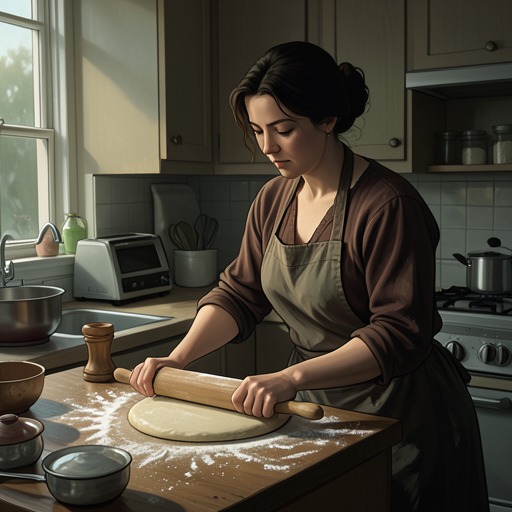
The recipe appears in February, at the start of the book’s second chapter. Its instructions begin with beating egg yolks, whole eggs, and sugar until thick, then adding the remaining eggs in stages. The original quantities were intended for eighteen people. For Pedro and Rosaura’s wedding, Tita and Nacha had to multiply the recipe tenfold because the cake was meant to serve 180 guests. That scale made one ingredient a logistical problem: they needed 170 good eggs on the same day.
The ranch’s answer was a preservation practice used for generations to maintain a supply of eggs through winter. The best eggs were gathered over several weeks and stored in a cask with crumbled sheep fodder. Nacha preferred eggs laid that very day, but the wedding required more than a single day’s laying could provide. Tita and Nacha used the fodder method because the eggs did not need to keep for many months. The cask sat beneath the kitchen table between them as they took out eggs and assembled the cake, making the old household technique part of the immediate labor of the wedding feast.
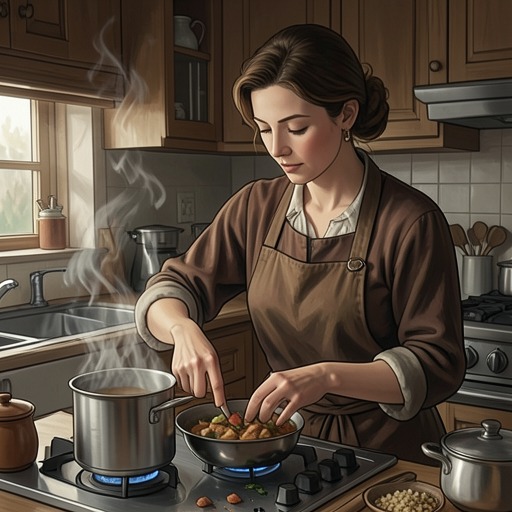
The preparation also links exacting work to emotion. Tita’s tears, shed while making the cake, become the one additional ingredient she later says she added. The recipe’s practical scale and procedure thus stand beside an element that cannot be measured or controlled by ordinary kitchen methods: the feeling carried into the food by its maker.
The wedding and its effects
During the celebration, Tita is absorbed in the knowledge that Pedro loves her. She is eager to leave the table and tell Nacha, but etiquette requires her to remain until the guests have finished eating. She eats her portion without noticing at first what is happening around her. As the guests taste the cake, longing and grief spread through the party. The response grows into a shared episode of distress that carries people across the patio and grounds. The cake affects everyone except Tita.
That exception gives the scene its sharpest contrast. The guests experience the feelings infused into the cake as their own, while Tita, preoccupied with her new certainty about Pedro, leaves the celebration without recognizing the full scale of the disturbance. Her attention is fixed on Nacha and on the news she wants to share, even as the wedding’s public festivity gives way to collective sorrow. The cake makes emotion communicable without explanation: a private experience passes through food to a crowd, but its maker does not undergo the same effect when she eats it.
Rosaura is among those overcome. Her distress becomes bound to the wedding dress and to the public humiliation of a celebration she believes Tita has ruined. She remains convinced that Tita put something into the cake. The wedding night therefore marks not only the cake’s uncanny reach but also the beginning of a lasting accusation between the sisters.
Blame and consequences
Mama Elena accepts Rosaura’s suspicion and concludes that Tita and Nacha deliberately added an emetic. She punishes Tita severely; Tita spends two weeks in bed recovering. Tita cannot persuade her mother that the only extra ingredient was her own tears. The difference between what Tita says she put into the cake and what Mama Elena believes exposes how the same food can carry opposed meanings: to Tita, it bears grief; to her mother, it is evidence of deliberate sabotage.
Tita’s wish to explain herself to Nacha ends in another loss. When she goes to find the cook, she discovers that Nacha has died. Nacha cannot support her account or answer the news Tita had been longing to share. The cake’s consequences thus extend beyond the guests’ immediate distress: its preparation and reception are followed by Tita’s punishment and by the absence of the person who had shared the kitchen work with her.
The episode also affects Pedro and Rosaura’s marriage. Rosaura’s distress leads Pedro to postpone consummation, and months pass before he considers the matter unavoidable. The cake does not simply interrupt the wedding feast; its aftermath enters the private course of the marriage for which the feast was held.
Culinary memory and narrative significance
The cake belongs to a book in which recipes carry family history as well as cooking instructions. Elsewhere, the narrator recalls inheriting Tita’s sensitivity to onions, a trait associated with Tita’s life from before her birth, and later connects cooking her own mother’s Christmas rolls with tears and memory. These recollections do not make the onion advice part of the wedding-cake recipe; they place the cake’s tears within a broader pattern in which food preparation transmits feeling across generations.
Tita’s cookbook makes that transmission durable. After the ranch is destroyed, Esperanza finds the cookbook beneath the remains and bequeaths it to the later narrator. The book preserves this story in its recipes, and its survival lets the wedding cake remain more than an isolated marvel. Its ingredients, labor, and effects become part of a family record in which cooking keeps the past present, even when the people who first made and shared the food are gone.